Showing posts with label man vs nature. Show all posts

Sea Sculptures of the Underwater Museum

Around the world are a few unusual sculpture museums. In order to gain entry to the museums, you must first put on your swimming gear and grab a snorkel or dive tank. This is because the museums are under the sea.

Art Works or Artificial Reefs?

The creator of the underwater museums, Jason de Caires Taylor, designs his sculptures with the intention of forming artificial reefs for sea life. The statues are made with PH neutral casting cement, which means that they will not poison the water or the fish, and will not degrade quickly in sea water. Taylor places his underwater museums in areas where reefs have been destroyed by storms, creating new homes for corals, fish and other sea life.
The statues of Taylor's underwater museums serve two purposes; to attract tourists and art lovers to the area and to create a home for fish, sea weed and other reef life. Many of the sculptures have holes drilled into the cement, creating nooks and crannies for fish and crustaceans to create a home for themselves. Over time, the statues get covered with sea weed and molluscs. Taylor has recorded this "evolution" of his artworks with photographs, enjoying the fact that although he may be finished with the artwork, nature continues to add its own art works to the statues.


Jason de Caires Taylor's "Vicissitudes" in Grenada, West Indies. This sculptural art work shows a group of people standing in a circle holding hands. The figures face outwards, creating the impression that they are protecting something within the circle. The underwater statues are life-sized, having been made from body casts of living people. 


A swimmer discovers one of Talor's underwater sculptures in Grenada and blows a kiss at the sleeping faces. The beauty of these art works is that the experience of discovery is different for each person. Because the statues are evolving and becoming part of the reef, whatone person sees today might be very different from what someone else might see next month.

These three photos show, from left, a mustachioed man from Cancun in Mexico, who was the model for the underwater sculpture shown in the middle photograph. The photograph on the right shows the statue a few years after it was placed underwater. It is covered in seaweed and providing an excellent home for reef life. The man who posed for the statue doesn't look very happy, but the ocean fish and plants who now live on his statue are probably very happy.

These are Taylor's cement statues on dry land, waiting to be placed into the sea, where they will live forever more. When posed like this, the groupps of statues begin to resemble a coral reef. Taylor's underwater museum is so far one of the most unique reef conservation methods that man has attempted. It combines human ingenuity with human creativity.

A Sculptured Society Living Under the Sea
The underwater museum in Cancun, Mexico was created in 2009 when Taylor installed several life size statues near the Manchones reef. There are now over 450 submerged sculptures in the region. These underwater statues are based on regular people living in and around Cancun, Mexico. The figures are sculpted to show them doing day-to-day activities such as riding a bicycle or watching TV. The underwater statues have a surreal nature about them; they seem to be average people frozen for eternity below the sea, standing silently as they are visited by tourists and art enthusiasts.


"Anthropocene" in Cancun, Mexico. This large sculpture shows a man curled up on the hood of a VW Beetle, a car that has been popular all over the world for decades. The sculpture has several holes drilled into the windows that allows fish to enter the hollow interior of the car sculpture. The reef was partially destroyed by storms, so the sculptures were created as a place for fish and other sea creatures to live.

"Inertia" in Punta Nizuc, Mexico. This sculptural piece depicts a man watching TV with a burger and fries. Like the VW sculpture, the TV set has holes drilled into it, which allow the fish to enter the hollow interior of the sculpture, where they are protected from storms and predators.
Crowds of statues like this make excellent artificial reefs, attracting fish and plant life that make the art works their homes. This picture was taken shortly after the statues were installed, before the seaweed and limpets start to add their own creative touch to the art. These underwater museums are also attractive to tourists, who travel great distances to be able to swim among the statues.

Over time, coral begins to grow over the statues, transforming the underwater sculptures into living art works. These natural art works are constantly changing over time as the reef continues to absorb the statues, making them part of the natural environment.
Each statue gets its own natural decoration as the reef grows over it. The different types of corals, sponges and sea weeds add patterns and textures to these living art works.

Taylor's underwater museums are a truly beautiful combination of art and conservation. The artificial reefs made of human statues give people an inspiring experience while offering natural reef life a safe home. Visit Taylor's website for more information on his underwater museums.


Photoshop Machine Animals Tell a Love Story of Nature and Technology

Photoshop artists can create hybrid creatures out of anything. The following images show how digital artists have combined man-made technological creations with animals created by mother nature. The results are mechanical animals.

Photoshop VW Buggy: An Insect Car
Volkswagen's popular family car, the VW Beetle, has been spoofed in this Photoshopped machine animal hybrid. The artist has combined the original shape of the VW Beetle with the colors and accessories of an actual, living insect, creating a visual pun.

Above: Instead of legs, the lady bug now has wheels. The carapace above the beetle's head forms the windshield of the insect car. This Photoshop artist has created a visual pun on the name of both the VW Beetle and the Lady Beetle.

The Photoshop Toad Engine Croaks when Cranked
In this machine animal hybrid, the Photoshop artist has shown the "hood" of the toad vehicle (it's skull) as being open, revealing the frog's brain engine within. This robot creature combines organic elements, such as its skin, with machine components, such as having headlights for eyes.

Above: The Photoshop techno toad and it's cyborg butterfly mechanic. [source]


The Robo Lobster's a Crustacean with Cogs
To eat this robot lobster, you'd need to suffer from Pica, a mental illness that compels people to eat inedible objects. Though it is prone to rusting, the Photoshop machine lobster lives in harmony with its watery surroundings, dining on the metal hulls of sunken ships.

Above: The robo lobster's vice-like claws deliver quite a pinch. [source]

Gone Fishing in Photoshop
This Photoshop artist has combined an aquatic animal; a simple fish, with a submarine to create an organic underwater vessel. Unlike regular submarines, the Photoshop fish sub uses fins to propel itself.

Above: The colorful Photoshop fish sub, complete with a glass engine room for tiny mariners to see out of. [source]

Photoshop Chicken Machine Clucks and Clanks
The Photoshop robot chicken ain't no turkey, and is hoping to be featured in the next Transformers movie . While this rooster alarm clock may be able to play your favorite songs, it's not going to produce any eggs for breakfast.

Above: The Photoshop chicken gives new meaning to the term "battery hen". [source]

Fly me to the Moon on a Hornet Motorbike
Tired of people driving close to your back bumper? You'll never need to worry about that if you're riding the Photoshop hornet bike. With its mean-looking features and nasty stinger, this buzzing motorbike will give you plenty of room on the roads, and if traffic is bad - it can fly you to work.

Above: Even as a Photoshop concept, the wasp motorbike is awesome. [source]


Photoshop Genetic Modification: Vegetable Animals

Adobe Photoshop artists around the world are creating animal vegetable hybrids with photo manipulation. The possibilities for veggie animal combinations are endless, limited only by the artist's creativity, imagination and whatever foods they have in their fridge...


Photoshop Vegetable Animals
Digital imaging software such as Adobe Photoshop and Zbrush allow artists to create all sorts of animal hybrids. Often, these are a construct of two or more animals, but every now and then, an artist will choose something else to combine with an animal. In the case of vegetable animals, digital artists will combine a fruit, plant or vegetable with an animal form.

Cactus Tortoise

A slow moving creature, the cactus tortoise is an armed cannibal that eats shoots and leaves.


Banana Fish

The banana fish is becoming popular in Asian cuisine for its fishy, fruity flavors. Although commonly used as a food source, a fish tank filled with these playful creatures makes for a decorative addition to kids' bedrooms.


Citrus Frog aka Orange Frog

Several new species of Citrus Frogs have been discovered, although the most famous of these vitamin-C enriched animal hybrids is the Orange Frog. Toad-licking organizations state that Citrus Frogs are the best thing to happen to the food industry since bread came sliced.


Elephant Tree

The latest hype in the genetic modification industry is the Elephant Tree. These creatures are rooted to the spot, making them an easy subject for tourists to photograph.


Potato Toad

In an attempt to end world hunger, scientists have combined potato and toad genes to create the potato toad. The potato toad has been digitally designed to swim across lakes and rivers and hop its way from one end of an impoverished area to another, spreading it potato toad eggs in its wake.


Onion Spider

The onion spider is a lesser-known specie of the bulb family. Chefs have taken to keeping entire colonies of this animal vegetable hybrid in their kitchens to keep away flies and provide fresh produce.


Chicken Flowers

KFC has found a new alternative to battery chicken farms, genetically modified chicken flowers. This renewable resource is both good for the environment while providing a valuable food source for humans.


Chrysanthemum Puppies aka Poodle Puffs

Retirees and stay at home mums are putting pressure on flower sellers for bouquets of Chrysanthemum Puppies, commonly known as Poodle Puffs. These furry flowers yap when people come to the door, will lick your hands for a tickle and have a tendency to widdle on carpets. Animal rights activists are appalled that these animal hybrids are becoming cut flowers for home decor.


Strawberry Frog

Executive chefs across the globe are getting creative with the latest design in food modification, the strawberry frog hybrid. These chimeras make a delightful, delicious dessert when served with ice cream or cream.


Chili Rooster

This photoshop animal hybrid design is the ideal gift for those who want a spicy wake-up call.


Gourd Pumpkin Fish

Simply known as the pumpkin fish, these hybrids make great tank mates for banana fish.


Read more on Art-Sci:

Animal Owners Tattoo Their Pets

Is tattooing an animal inhumane, or is it art? Animal Rights lobbyists exclaim in horror as animals receive decorative tattoos from their owners, claiming that animals can’t choose whether or not to not have the tattoos done.


Identification Tattoos

Owners of rare or valuable pets have the option to tag their pets with an identification tattoo. The marking deters theft, and if the pet is found, the code can be traced back to the owner of the animal. The tattoo allows a person to know who the breeder of the animal is and the litter number that the animal came from, which authenticates the lineage of the animal. These tattoos are performed while the animal is under anaesthetic, at a young age.


This dog has a Hello Kitty tattoo on its belly, apparently for identification purposes. The dog was tattooed by its owner, while under anesthetic. The actual tattooing process wasn’t particularly cruel, but now this poor pooch must live in Hello Kitty hell, unable to lift its leg in public for fear of other dogs seeing the abominably cutesy cat face.


Tattooed Fish

Do fish have feelings? Hopes? Dreams? Would they approve of having hearts, spots and stripes tattooed onto them in garish pinks, greens and blues?
Who knows? Unless we find fish whisperers to talk to the little guys and ask them their opinion; tattooed fish will continue to be a lame fad for tasteless consumers.


Imported from Singapore and Hong Kong, these tattooed mollies are making their way into fish tanks across the globe. The actual process of the inking is unclear. Some say the fish are sucked into a clear tube and then tattooed with a laser, other say the fish are tattooed in the traditional needle and ink method.

Do fish feel pain, or are they just a vegetable that moves? The ink is only scale deep, so it is debatable whether the fish are hurt in any way.

Tattooed Pigs

Yet more appalled shrieks from animal lovers, as Belgian tattoo artist Wim Delvoye decorates living pigs with permanent tattoos.


Delvoye says, “I tattoo pigs because they grow fast and they are so much better to tattoo than fish. I tattoo them when they are young and I like the way the artwork stretches and distorts over time. Essentially, we invest in small tattoos and we harvest large paintings.” See full interview here.


The pigs live a peaceful lifestyle on an art farm in China, free to roam and forage for food. Previously destined for the slaughterhouse, these pigs have a full, happy life ahead of them in return for the tattoos on their skin, which are harvested after their death. The pigs are tattooed whilst sedated, and may not even be aware of their own markings.


Animal Rights groups wish to stop unnecessary cruelty towards animals. But is it really so cruel to trade a slaughterhouse death for a few tattoos and a tranquil life on a farm?

Although tattooing animals is not a common practice, it has become a fad amongst tasteless fashion mongers. One can only wonder at the fact that there are laws against children being tattooed, yet there are no laws against the tattooing of animals. Should this practice be illegal or not? 

Paintings by Elephants

It has been discovered that elephants enjoy a number of human past-times, such as games, dance and art. Elephant sanctuaries are now encouraging elephants to explore their creative talents by allowing the elephants to paint.


Elephant Artists

An elephant’s trunk can be thought of as being a long, supple appendage that allows the elephant to grip objects. Some elephant artists are taught by their trainers to hold a paintbrush by wrapping the tip of the trunk around the paintbrush, whereas others are encouraged to place the brush into a ‘nostril’ at the end of the trunk, to give the elephant more control over the brush.


Most elephant trainers will assist the elephant artist during the painting process. Some will guide the elephant’s trunk across the canvas, while others take a purist approach to art and leave the elephants to create their paintings unaided. Generally, an elephant trainer will set up the easel and canvas and load paint on to the brush before handing the paint brush to the elephant. Elephant artists have been known to get impatient with their assistants, and will tap the brush against the assistant’s chest to demand more paint.


Fine Art Paintings by Elephants

Elephants can be trained to reproduce recognizable images, such as other elephants, scenery, and recognizable objects such as flowers. They can even be taught to make self-portraits. However, to some this isn’t true elephant art. When left to create alone, elephants paint in an abstract style using lines, curves and dashes of paint to form the finished work.

Trained Elephant Paintings

Elephant trainers can teach an elephant to reproduce an image over and over again. The result is a picture that could have been drawn by an eight-year-old child. Although endearing, this form of art is losing popularity with elephant art fans, as the elephants are taught to paint these pictures as a performance, similar to a dog who has been taught to do tricks. For elephant art purists, these reproductions of the trainer’s initial design don’t constitute as ‘real’ elephant art.

  
Above: Elephants can be taught to reproduce a specific image, which they are then asked to reproduce for tourists. On each of the paintings above, you can see a stamp of authenticity – this shows that an elephant was the artists behind the painting. Whether this is truly ‘art’ or not depends on an individual’s opinion of what art is.

Untrained Elephant Paintings

Some elephant sanctuaries that specialize in elephant art will train an elephant to hold the brush and show the elephant how to apply paint to the paper, without teaching the elephant to create a specific shape on the page. These elephants are given the space and time needed to create whatever imagery they desire. The result is a simple, abstract collection of lines, shapes and colors.

Trainers claim that the elephants know when the piece is done, and the animal will often stand back and admire their work before heading down to a river to swim. It has also been suggested that like human artists, elephant artists have ‘off’ days, when the artistic well runs dry.


Buy Paintings by Elephants Online

Elephant art can be bought online through various websites. Here are just a few to get you started: Elephant Art Gallery, Elephant Art

Most elephant sanctuaries that are creating elephant art use the money raised by the paintings to create a better lifestyle for the elephants that they house. There are however some elephant owners who simply use the elephant’s creativity for their own gain. It is up to the buyer to decide which situation they would prefer to support through buying elephant art.

Read More on Art-Sci:

 3-D Graffiti Sculptures Hit the Streets

Recycled Kitchen Utensils become Art

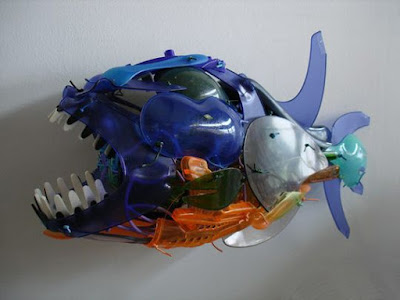
Sayaka Kajita Gans is a Japanese artist who recycles discarded kitchen utensils, toys and metal items by transforming them into emotive sculptures.


Sayaka Kajita Gans, Recycling Artist

Gans says that her work process reminds her of growing up in several different countries. Moving from one home to another throughout her childhood gave Gans a sense of disconnectedness, which is conveyed through her art. Each item that Gans chooses to use in her artworks are carefully selected, and must meet the requirement of being previously owned, used and discarded. Gans gives these pieces a new life by combining them to create an animal form that seems almost alive.


Gans uses flowing lines to create a sense of life and movement in her sculptures. Each creature seems to be frozen in time, like a single frame out of an animation. Each part of the animal is made up of a series of curves and arcs that further add to the sense of movement that the sculpture conveys. Art made with reclaimed objects is gaining popularity around the world, but it is a rarity to see such skill applied to recycled art.


When sketching, an artist will often create motion lines behind the subject to convey speed and movement. Gans has incorporated this technique into her sculptures, as seen above in the sculpture of a running cheetah, Fogo. These motion lines add to the sensation of movement in Gans’s work.


In Emergence, Gans has created two horses that appear to be emerging from a wall. The incompleteness of the horse’s bodies portray Gans’s sense of disconnectedness. It creates a transitory feeling of life existing only in a moment, fading into the past within seconds, never to be reclaimed. In converse, it can also form the idea that life emerges from the past, yet is always tied to its beginnings.
 In Emergence, one can easily see the shapes of some of the found objects that Gans has used. The ears on the black horse are spades, and the ears on the white horse are large spoons.


This piece uses several individual sculptures to create the finished product, Plunge. The penguins depicted appear to be plunging into water, even though they are hung in air. The piece gives the viewer the fun sensation that they are standing beneath the surface of the water watching the penguins dive. Gans has given the impression of water movement behind the penguins by twisting wire into swirls. 

Below are more examples of Gans’s sculptures. You can visit her website at SayakaGans.com